Every study is a thread leading patients back to their lives.

StudyWeave takes the repetitive part out of building a study. Loom, our AI, reads the protocol and drafts the study map and the eCRFs; your team decides, refines and signs.

Studies / S1505 / Forms

Forms

13 forms at 5 events · Loom’s eCRFs from Design v1

Review forms
By eventAll forms
Screening

Before registration · 4 forms

Eligibility19 questions
Surgical consult3 questions
Preoperative · Cycles 1–3

Every 28 days · 3 forms

Preoperative treatment8 questions
Response assessment3 questions
Surgery

4–8 weeks after Cycle 3 · 2 forms

Surgery1 needs review
Pathology4 questions
Postoperative · Cycles 4–6

After surgery · 2 forms

Postoperative treatment8 questions
Laboratory values9 questions

Loom · Drafted from the approved study map. 1 question needs your decision.
Public protocol · S1505 · Example

How it works

From protocol to study build, in three steps.

1 · Read

Loom reads the protocol and maps the study.

Objectives, endpoints, eligibility, visits and assessments, each linked to its source text, page and version. What Loom can’t support with the protocol’s own words comes to you as a question.

See how Loom reads a protocol →
Studies / S1505 / Map

Study map

Draft · from the protocol

Sources
Detailed description · Outline
Treatment repeats every 28 days for 3 courses in the absence of disease progression or unacceptable toxicity. Patients achieving stable disease or better undergo pancreatectomy 4-8 weeks after completion of first 3 courses of treatment. … patients are followed up every 3 months for 2 years and then every 6 months for 2 years.

Visits

ScreeningWithin 28 days before registration
Preoperative cycles 1–3Every 28 days
Surgery4–8 weeks · from when?
Postoperative cycles 4–6
Follow-upEvery 3 months, then 6

Endpoint

Overall survivalPrimary · 2 years
Public protocol · S1505 · Example

2 · Decide

Your team reviews and approves the map.

Review by exception, then sign. Nothing moves forward without a person’s approval.

See the study map →
Studies / S1505 / Map / Review

Review study map v1

4 items · 1 needs a decision

Screening
Within 28 days before registration
Approved
Preoperative cycles 1–3
Every 28 days
Approved
Surgery, 4–8 weeks
Needs a decision · from the end of Cycle 3, or its last dose?
Decided: from the last dose · A. Chen
Overall survival
Primary endpoint · 2 years
Approved
Approve and sign

Study map v1 · Meaning: Approved

Signing as Dr A. Chen · Medical monitor

Sign and approve
Public protocol · S1505 · Example

3 · Build

Loom drafts the forms; your team refines them.

The forms arrive placed at their visits. Write checks and cross-form references in plain language, or ask Loom to draft them, then export to OpenClinica 4 or CDISC ODM.

Try the form designer →
Studies / S1505 / Forms / Response assessment

Response assessment

Working draft · 3 questions

Review form
Restaging3 questions
1
What is the overall response?

Pick one · Required · Protocol · RECIST 1.1

Complete responsePartial responseStable diseaseProgressive disease
2
When was the restaging scan?

Date · Required · Loom suggested · Protocol

Date Check: 2 to 4 weeks after the last dose of Cycle 3
Uses “Last dose date” from Preoperative treatment
Public protocol · S1505 · Example

See for yourself

Click any question. See where it came from.

SWOG S1505, a public protocol, shown the way StudyWeave lays it out.

Studies / S1505 / Forms

Forms

13 forms at 5 events · Loom’s eCRFs from Design v1

DraftReview forms
Screening

Within 28 days before registration · 4 forms

Baseline tumor assessment6 questions
Surgical consult3 questions
Laboratory values9 questions
Preoperative · Cycles 1–3

Every 28 days · 3 forms

Preoperative treatment8 questions
Laboratory values9 questions
Surgery

4–8 weeks after Cycle 3 · 2 forms

Pathology4 questions
Postoperative · Cycles 4–6

Within 4–8 weeks after surgery · 2 forms

Postoperative treatment8 questions
Laboratory values9 questions
Common logs

Not tied to a visit · 2 forms

Adverse events7 questions
Recurrence4 questions
Surgery3 questions

Protocol · ClinicalTrials.gov NCT02562716

Example Needs a decision · The outline counts 4–8 weeks from the end of the first 3 courses; the outcome measures count from the last dose of Cycle 3. Loom flagged it for your team instead of picking one.

Demo · public protocol · read-only · S1505 on ClinicalTrials.gov · Example: the forms and the flag stand in until a recorded S1505 run replaces them; the passages are the registry’s own text.

Why it matters

Every trial asks one question, with great care: does this treatment help?

Before the first participant enrols, someone turns a long protocol into the forms that will capture the answer. Today that’s done by hand, one form at a time, by people whose judgement is needed elsewhere. StudyWeave gives them a sourced first draft, so their time goes to the decisions only they can make.

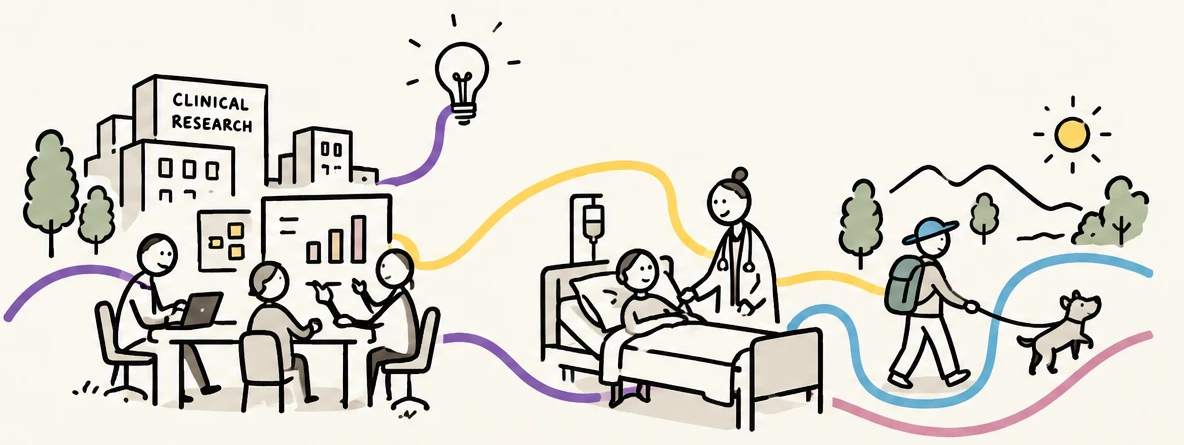
A research team at work, a participant cared for at a study visit, and someone back outdoors with their dog, joined by coloured threads.

Trust

Trust you can check.

It says when it isn’t sure.

What Loom can’t support with the protocol’s own words comes to you as a question, not an answer.

A record you can follow.

Versions, electronic signatures and an audit trail, built with 21 CFR Part 11 controls.

One study, every team.

Sponsors and CROs work in the same study, each with their own roles.

Your protocol isn’t training data.

We don’t train AI models on your protocols.

More on trust →

Who it’s for

Made for the people who build trials.

Data managers and study builders

Start from a sourced draft, not a blank page. Loom does the first pass in the background; you review what it found, settle what it couldn’t, and spend your day on the build itself.

Heads of data management and clinical operations

See every item in the build beside the protocol text it came from, and every decision beside the name of the person who made it.

Sponsors and CROs

Work in the same study, each organisation with its own people and roles.

So new treatments reach the people waiting for them.

We’re looking for design partners: small and mid-sized sponsors and CROs whose teams build studies and want a say in how StudyWeave grows. If that’s you, we’d love to show you around.